








Jamaica is making a significant move towards regulating and guiding the use of artificial intelligence by commencing work on its first comprehensive national AI policy.
This announcement was made during the launch of the UNESCO Jamaica Artificial Intelligence Readiness Assessment Report. This report aims to help countries assess their ability to manage and deploy AI responsibly.
The assessment framework identifies gaps and provides recommendations to support the development of ethical, inclusive, and sustainable AI systems. It evaluates preparedness across five key areas: legal and regulatory structures, technological infrastructure, economic readiness, social and cultural factors, and education and scientific capacity.
Minister Andrew Wheatley, responsible for science and technology, explained that with both the readiness assessment and policy recommendations now complete, Jamaica has officially begun drafting its AI policy. This process will align with the country’s long-term development plan, Vision 2030 Jamaica, and will involve extensive public consultation.
Wheatley stressed that the policy will be developed transparently and submitted to Cabinet for approval, ensuring wide stakeholder input before implementation through a dedicated coordination programme.
He described the readiness assessment as a “defining moment” in Jamaica’s digital transformation, noting that the country is among the first in the Caribbean to conduct a nationally coordinated AI evaluation using UNESCO’s methodology.
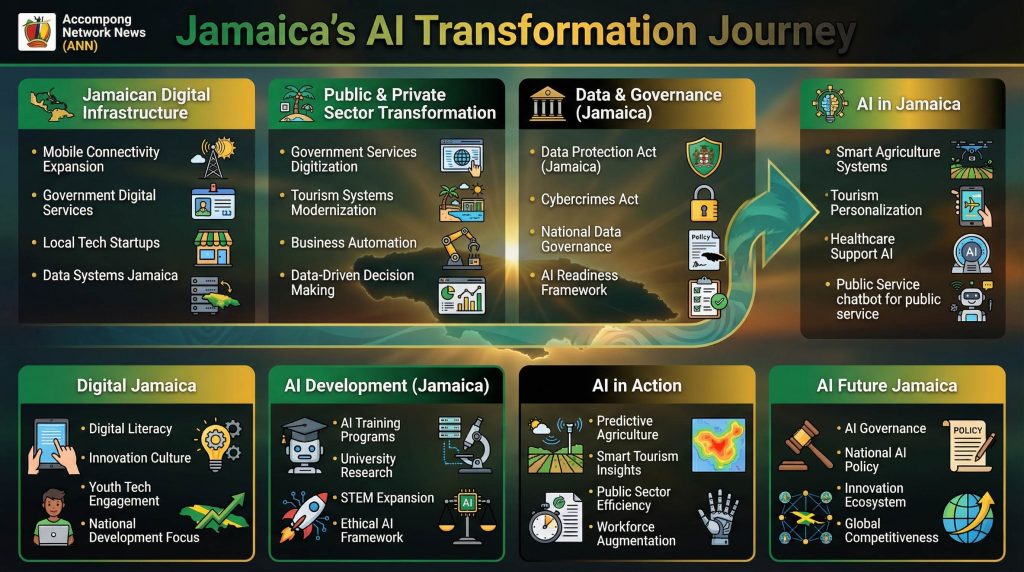
The report highlights Jamaica’s existing strengths, such as frameworks like the Data Protection Act and the Cybercrimes Act. However, it also points to the need for AI-specific legislation, stronger oversight mechanisms, and improved institutional capacity.
Wheatley believes Jamaica’s young, tech-savvy population and growing digital ecosystem offer a solid foundation for AI innovation with global impact. However, he also recognises the need to address key issues like governance structures and safeguards against bias and misuse.
The assessment recommends increased investment in AI to boost productivity across vital sectors, including agriculture, tourism, healthcare, and public services.
Furthermore, it calls for expanded AI education from early childhood through tertiary and vocational training. This includes efforts to close gender gaps in STEM and promote widespread AI literacy.
Wheatley emphasises that Jamaica’s early progress comes with a responsibility to lead by example in the region.
He concludes that Jamaica aims to demonstrate how small island developing states can effectively and responsibly govern transformative technologies. This positions the country as a proactive and principled player in the global AI landscape.