




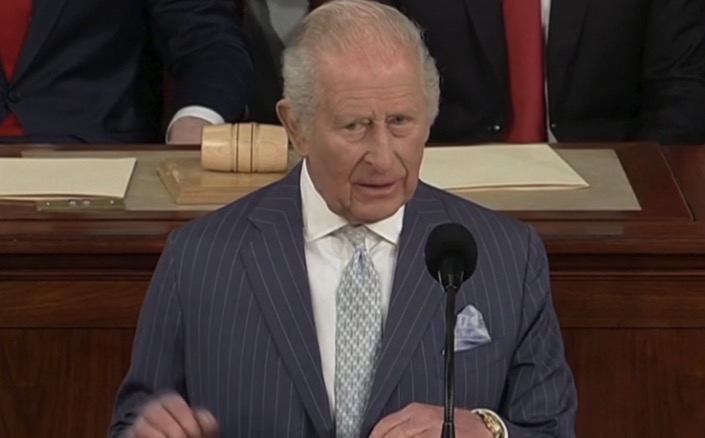
King Charles III delivered a historic address to a joint session of the United States Congress on Tuesday, reaffirming the enduring alliance between the United Kingdom and the United States while issuing a pointed call for stronger global action on climate change.
Speaking at a moment of heightened geopolitical uncertainty, the King described the UK–US relationship as an “unbreakable bond,” rooted in shared history, democratic values, and a long record of cooperation on global challenges. He praised the two nations’ joint leadership on issues ranging from security to human rights, emphasizing their continued responsibility to uphold international stability.
But beyond the diplomatic tone, a significant portion of the address focused on the environment—an issue that has defined much of Charles’s public life. Drawing on decades of advocacy, he warned that the effects of climate change are no longer abstract or distant, but immediate and intensifying.
He pointed to the growing risks posed by extreme weather, resource scarcity, and ecological degradation, linking them to broader concerns about economic inequality and global security. The King urged lawmakers to approach climate policy as a shared and urgent responsibility, rather than a matter of political division.
Highlighting the role of innovation and investment, he called for deeper cooperation between nations to accelerate the transition to sustainable energy and more resilient economies. He stressed that multilateral action would be essential in addressing challenges that transcend national borders.
The address marked a rare and symbolic moment in transatlantic relations, underscoring both continuity and change. While reaffirming the strength of the alliance, King Charles used the platform to press for renewed leadership on one of the defining issues of the century.
His message was clear: the partnership between the United Kingdom and the United States remains vital—not only for preserving shared values, but for confronting the global crises that will shape the future.