






Government officials have moved to address growing public concern and misinformation surrounding Jamaica’s post-hurricane recovery efforts, particularly the Shelter Recovery Programme introduced after Hurricane Melissa.
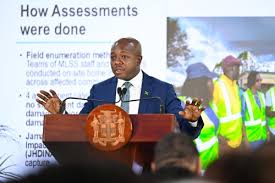
Speaking at a post-Cabinet media briefing at Jamaica House, Charles Jr. urged citizens to avoid being “used as political pawns” amid confusion over eligibility for housing support.
Damage Assessment Overview
Following the Category 5 hurricane, which struck Jamaica on October 28, 2025, assessments conducted by the Ministry of Labour and Social Security classified households as:
- 41,079 with minor damage
- 42,586 with major damage
- 17,826 with severe damage
To date, 113,234 household assessments have been completed using a digitised tracking system, enabling real-time updates and improved transparency.
How the Programme Works
The Shelter Recovery Programme is a nationwide initiative aimed at restoring safe housing while avoiding duplication of benefits. It includes:
- Cash grants
- Government-led repairs
- Partner-supported rebuilding
- Relocation and long-term housing solutions
A key component, the Restoration of Owner or Occupant Family Shelters (ROOFS) programme, provides financial assistance based on verified damage:
- $75,000 for minor damage
- $200,000 for major damage
- $500,000 for severe damage
Backed by an initial $10 billion allocation, the programme prioritises vulnerable groups, including seniors and persons with disabilities.
No Duplication of Benefits
Officials stressed a strict “one benefit per household” rule. Individuals already assisted—such as those whose homes were repaired through government initiatives like military-supported roof repairs—will not qualify for ROOFS grants.
Charles Jr. made it clear that:
- Households classified as having no or insignificant damage are not eligible
- Those already receiving assistance under one component cannot access another
- The system is fully digitised, allowing authorities to track and verify all claims
Addressing Misinformation
The government has pushed back against what it described as attempts to “mix truth with exaggeration and lies,” which have contributed to public confusion.
Charles Jr. warned that some individuals are knowingly spreading misinformation, particularly regarding eligibility, and cautioned against attempts to exploit the system. He noted that the reconciliation phase allows officials to identify discrepancies and resolve complaints efficiently.
Call for Responsible Engagement
While acknowledging early technical issues, officials say most have been resolved. Community leaders and public representatives are being encouraged to raise concerns responsibly through official channels rather than amplifying outdated or inaccurate claims.