
By Accompong News
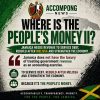
Somewhere beneath the waters south of Jamaica, there may be seven billion barrels of oil.
At today’s prices, that could represent approximately US$742 billion in potential value — roughly thirty-nine times Jamaica’s GDP. Yet the company holding the exclusive licence to explore for it is small, lightly capitalized, and has never drilled a well in Jamaica.
That alone raises questions. But the deeper story is not only about oil.
It is about licences, intermediaries, offshore registration, political approvals, foreign mining interests, and the public’s right to know who is controlling access to Jamaica’s natural resources.
ANN Public Records Note
ANN is not alleging criminal wrongdoing. This report examines public records, corporate filings, licence transfers, parliamentary statements, vessel records, and published media coverage.
The issue is transparency, public accountability, and whether Jamaica’s natural resources are being managed in the public interest.
The Oil Licence Question
United Oil & Gas is registered in the United Kingdom under company number 09624969. But it was not always called United Oil & Gas.
It began as Senterra Energy Limited, then became Senterra Energy PLC, and later became United Oil & Gas — three names in two years for a company that has not drilled a well in Jamaica.
The company was incorporated in June 2015, one year after Jamaica’s then energy minister, Phillip Paulwell, signed an exploration agreement with Tullow Oil.
Paulwell later acknowledged that he was also negotiating with Repsol, one of the world’s largest energy companies, and that Repsol’s proposed terms were, in his own words, significantly more favourable.
Yet the agreement went to Tullow.
That decision still deserves public explanation.
The Numbers Do Not Add Up
In 2020, Tullow handed its 80 percent stake in the Jamaica project to United Oil & Gas for what was described as a nominal fee.
That meant a small company, led by former Tullow employees, received one of Jamaica’s most speculative offshore oil assets for almost nothing.
Minister Daryl Vaz told Parliament that United Oil had spent US$39.3 million on Jamaica. But the company’s own audited accounts reportedly showed US$7.4 million in capitalised Jamaica assets.
The company also reported limited cash, unpaid Jamaica-related bills, and auditor warnings about its ability to continue.
This is the entity Jamaica is trusting with a resource potentially worth hundreds of billions of dollars.
That gap demands scrutiny.
The Gatekeeper
His name is Bobby Stewart.
He is the eldest son of the late Gordon “Butch” Stewart — the man who built Sandals Resorts, founded the Jamaica Observer, and created the ATL Group.
In 2017, Bobby Stewart founded Geophysx Jamaica. But the company was not registered in Jamaica. It was registered in St. Lucia.
Public corporate records identify Bobby Stewart as its sole shareholder.
Today, Geophysx holds more than 70 mineral exploration licences covering approximately 4,000 square kilometres — about 37 percent of Jamaica.
One man. One private company. Registered offshore.
That is why this story matters.
The Licence Factory
Every single licence was approved under the JLP government.
Four consecutive ministers signed off:
Mike Henry. Robert Montague. Audley Shaw. Floyd Green.
Bobby Stewart’s father donated J$31.5 million to every Member of Parliament in the country — both parties. Prime Minister Andrew Holness called Butch Stewart one of Jamaica’s most brilliant business minds.
Meanwhile, the family’s own newspaper, the Jamaica Observer, covered Bobby Stewart’s mining deals without clearly placing the family connection at the centre of the reporting.
Bobby Stewart then flipped those licences into deals with some of the world’s biggest mining companies.
Barrick Gold gained access to approximately 400,000 hectares.
Freeport-McMoRan committed US$75 million.
Bobby Stewart retained interest through his own joint-venture position.
Jamaica’s royalty: 5 percent.
The Insider Network
Here is where the pattern becomes harder to dismiss.
The company that sold Bobby Stewart his first six licences for US$210,000 was called Carube Copper.
Carube’s co-founder, Jeff Ackert, spent six years at Barrick Gold.
The CEO who later ran the company, Stephen Hughes, spent twelve years at Freeport’s Grasberg mine in Indonesia.
Ackert came from Barrick.
Hughes came from Freeport.
The licences ended up with Barrick and Freeport.
It looks less like ordinary discovery — and more like a structured handoff.
The Handoff
On paper, the US$210,000 sale was a transaction.
But in context, it raises a larger question:
Was this an ordinary market sale, or a strategic handoff?
The licences needed to move through a politically connected Jamaican before reaching their final destination with the world’s largest mining companies.
Bobby Stewart became the central intermediary.
From BHP’s first exploration in the 1990s to Barrick’s 400,000-hectare earn-in in 2024, Jamaica’s mineral wealth appears to have moved through a long chain of Australian, Canadian, and British companies.
Hand to hand. Company to company. Jurisdiction to jurisdiction.
At the end of that chain, Jamaica keeps five percent.
The Vessels
The vessel Minister Daryl Vaz was photographed on is identified as the R/V Gyre.
It was built in 1973.
It is more than fifty years old.
It is flagged in Vanuatu, a Pacific island nation thousands of miles from Jamaica.
On vessel-tracking databases, the owner field is blank. The manager field is blank.
That makes it a vessel with unanswered questions around ownership and management.
But when the Jamaica Observer — the Stewart family newspaper — published its article about United Oil, the photo used showed a different vessel: the Polarcus Adira, a 92-metre, state-of-the-art seismic research vessel.
On April 24, 2026, that vessel was sold.
The buyer was undisclosed.
The price was undisclosed.
Again, the same question returns:
Who is behind the assets connected to Jamaica’s resource future?
The Pattern
Across this story, every transaction follows a similar pattern:
Obscure the buyer.
Obscure the owner.
Register offshore.
Use intermediaries.
The question is not only what they are doing.
The question is who is behind it.
Jamaica is 4,244 square miles of limestone, karst, volcanic rock, rainforest, mountains, and coastal waters.
Beneath its mountains there is copper and gold.
Beneath its rainforest there is bauxite.
Beneath its seabed, there may be oil.
Its people have a constitutional right to a healthy and productive environment.
What they do not have is full transparency.
What Remains
The public still does not know the full terms of the oil agreement.
They do not know how much Bobby Stewart paid the government for more than 70 mineral licences.
They do not know who owns the vessel their minister was photographed on.
They do not know who bought a seismic ship on April 24.
What they do know is this:
The son of one of the wealthiest men in Jamaican history controls approximately 37 percent of the island’s mineral rights through a company registered in St. Lucia.
Major international mining companies are now connected to those rights.
A small oil company continues to hold Jamaica’s offshore exploration licence.
And the public is still being asked to trust a process it cannot fully see.
The information was always there.
It just had not been assembled.
Until now.