



By Jah B
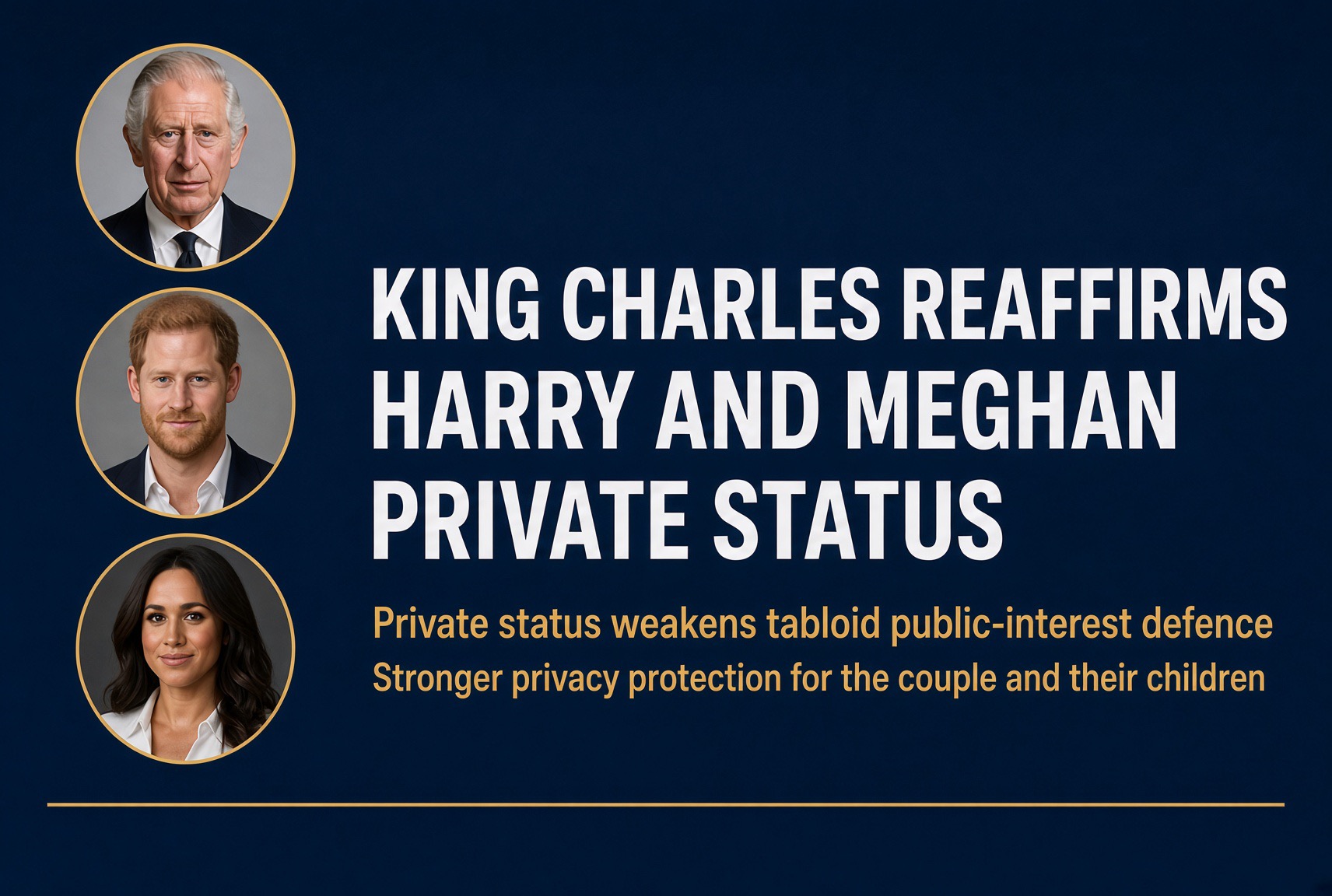
King Charles III has formally reaffirmed that Prince Harry and Meghan Markle remain non-working members of the British Royal Family, drawing a clear institutional line around their status following the couple’s return to the United Kingdom after years living in the United States.
A letter issued at the King’s direction through the Lord Chamberlain, circulated to senior government, military and other official bodies, states there has been no change to the couple’s existing arrangement. Harry remains the Duke of Sussex and Meghan the Duchess of Sussex, but neither carries out representative duties on behalf of the Sovereign. Their HRH styles remain in abeyance and are not used. The Palace described the correspondence as intended to remove uncertainty, not announce a new settlement.
What the letter does establish, quietly but consequentially, is something Harry and Meghan have spent years fighting for — the legal and institutional standing of private citizens.
The distinction matters more than it might first appear. British press coverage of the Royal Family has historically been justified through the public interest argument, the idea that because working royals draw on taxpayer money and the sovereign grant, the public has a right to scrutiny of their lives. The King’s letter removes that justification where the Sussexes are concerned. Their financial independence from public funds is explicitly confirmed. Their charitable activities are classified as personal matters rather than official engagements on behalf of the Crown. The couple’s privacy, the letter states, will continue to be fully respected.
For Harry and Meghan, who have spoken at length about the damage caused by intrusive and inaccurate press coverage, those words carry real legal and practical weight. Tabloid editors who have long relied on the accountability argument to justify aggressive coverage will find that argument considerably harder to sustain when the Palace itself has drawn a formal line between the Sussexes and the machinery of royal public life.
That protection extends to their children. Archie, now seven, and five-year-old Lilibet have grown up under sustained media attention. With the couple’s private status now formally reaffirmed at the highest institutional level, any aggressive attempt to photograph or expose the children moves into far more legally precarious territory. The letter provides the formal backing the couple has long sought to enforce the boundaries they established informally years ago.
The question of public funds has also been addressed directly. The Palace has instructed official and state organisations to route any matters involving potential public costs connected to the couple directly through Buckingham Palace. That instruction removes the ambiguity that has fuelled years of tabloid speculation about hidden subsidies and taxpayer-funded perks. Operational security matters remain the responsibility of the relevant police authorities and the RAVEC committee, separate from Palace administration.
A spokesperson for Harry and Meghan said the couple were surprised they had not been informed about the correspondence in advance, though Palace sources indicate their team received the letter before it was publicly released. The episode illustrates that the relationship between the Sussexes and the institution they left six years ago remains complicated even as both sides appear to be managing it with more care than before.
What the letter ultimately provides is clarity. Harry and Meghan can live in Britain, pursue commercial activities, support charitable causes, and appear publicly. None of that constitutes royal duty. They are not returning as working members of the monarchy. But as private citizens with the Palace’s formal confirmation of their independence and privacy, they are returning with something arguably more valuable than a royal title — the freedom to build their lives in Britain entirely on their own terms.