







By Jah B
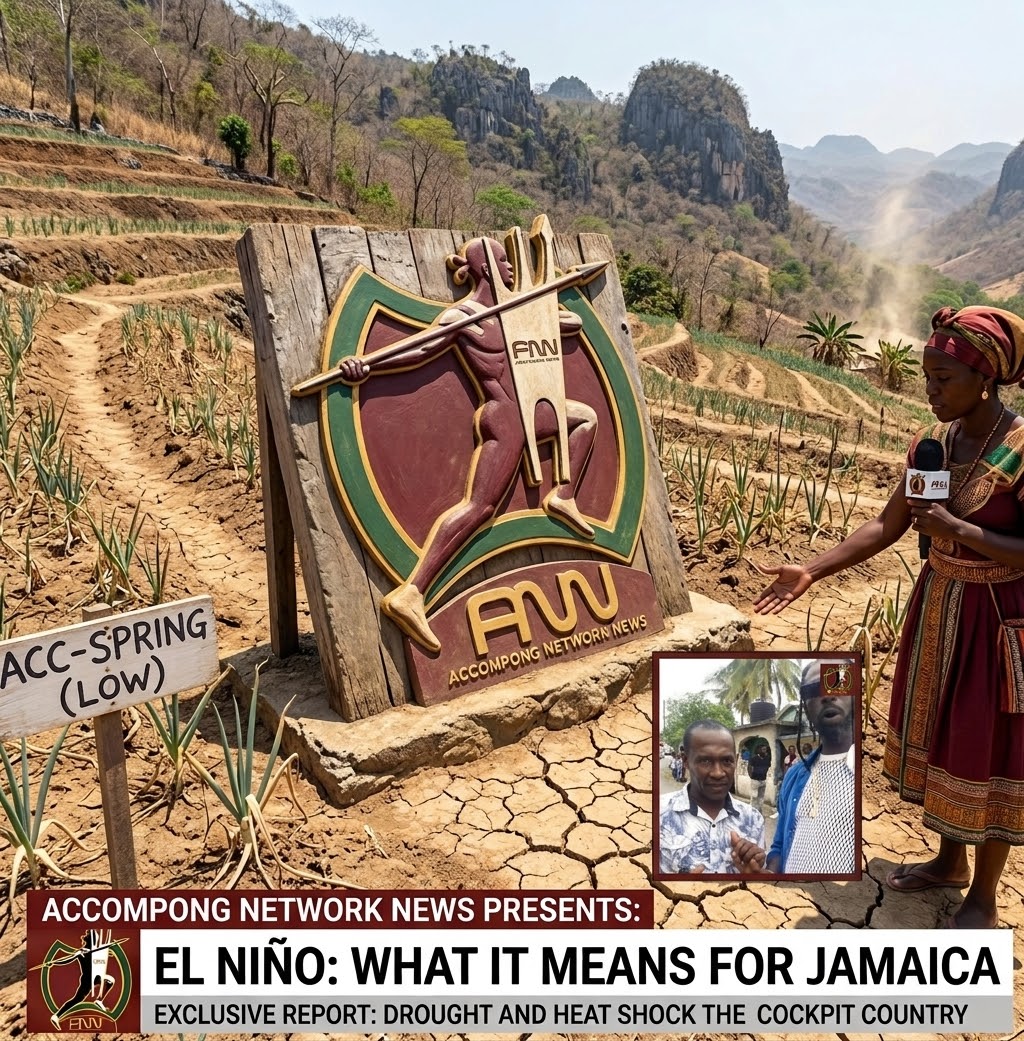
“The weather is unpredictable. It is not as in years gone by when we could plant our crops knowing the fall season is coming and we are going to get rain.”
Those words from Audley Rowe of Accompong Town reflect a reality that many farmers across Jamaica are now confronting.
Rowe recently travelled through southern St Elizabeth and said the contrast was stark.
“The earth is dry. On the Junction side it is as if the earth scorched from the sun, mi bredrin,” he said. “Here in Accompong we get a little rain now and then, but the weather unpredictable nowadays.”
For farmers, this is not an abstract discussion about climate. It is about whether the soil has enough moisture for planting, whether crops survive, whether there is water for livestock and households, and whether families can still afford food.
Jamaica is facing a difficult mix of drought conditions, high temperatures and changing weather patterns. The consequences could extend well beyond the farm gate.
A country already under pressure
The dry conditions are not simply a warning of what may happen later. They are already affecting livelihoods.
The Meteorological Service reported that 11 of Jamaica’s 14 parishes recorded rainfall below their 30-year climatological average in June. St Elizabeth, St James, St Ann and St Mary were classified as being in drought.
That makes Rowe’s description especially important. Farmers do not experience drought as a figure on a chart. They experience it when fields begin to wither, when water tanks fall too low for irrigation, and when the cost of keeping crops alive becomes greater than the likely return.
Jamaica’s agricultural sector is especially vulnerable because much of it still depends on rainfall. In places such as St Elizabeth, the consequences can be severe.
Reports already suggest that prolonged dry conditions are weighing on agricultural production, with farmers facing losses and struggling to maintain crops. The Planning Institute of Jamaica has also identified drought as one of the factors behind the contraction of agriculture in 2026.
Changing weather, growing risk
What farmers are seeing is not only less rain, but less reliable rain.
The concern is not just the total amount of rainfall Jamaica receives over a season. It is when the rain comes, where it falls, and whether it comes often enough to sustain crops.
A single heavy shower cannot make up for long dry spells if planting seasons become less predictable. Farmers depend on timing as much as quantity. When that timing shifts, the entire farming cycle becomes harder to manage.
This is why changing weather patterns matter so much. They affect planting decisions, water storage, crop survival and ultimately farm income.
Broader climate patterns, including El Niño, may play a role in making conditions hotter and drier, but the more immediate issue for Jamaica is the lived reality of increasingly unreliable rainfall and water stress.
The food security question
This is where a weather problem becomes a food-security problem.
Jamaica can import food when local production declines, but imports come at a cost. Greater dependence on overseas markets can expose consumers to higher transportation, energy, fertilizer and food prices.
And Jamaica is entering this period with many people already under pressure.
An FAO-based estimate found that 55.1 per cent of Jamaica’s population experienced moderate or severe food insecurity during 2021 to 2023. That does not mean more than half of Jamaicans were going hungry. Food insecurity is a broader measure that includes unreliable access to sufficient, safe and nutritious food. Even so, the figure is significant. It suggests that a large share of the population was already struggling in some way to secure adequate food.
The concern is even greater in communities already affected by economic hardship.
That creates a direct link between the farmer in the field and the consumer in the market. If drought reduces production, fewer local goods reach market. If supply falls, prices rise. And if prices rise while incomes remain tight, more families will struggle to maintain a nutritious diet.
Accompong and the rural reality
For Accompong and other rural communities, resilience cannot mean waiting until drought has already become severe. It has to begin with preparation.
Rainwater harvesting should become a much bigger part of rural development. Farmers need storage tanks, catchment systems and small ponds so rainfall can be captured when it comes.
Soil protection also matters. Mulching, agroforestry, contour farming and other moisture-conservation methods can reduce evaporation and help protect farmland during dry periods.
Efficient irrigation is equally important. Where water is available, drip irrigation and similar systems can help farmers use less water while sustaining crops.
These are not futuristic ideas. They are practical responses to a problem Jamaican farmers are already living with.
More than a seasonal problem
It would be a mistake to treat this only as a short-term dry spell.
Jamaica’s farmers are describing a deeper shift in weather patterns, one that is making traditional assumptions about rainfall less dependable. When seasons become harder to predict, farming becomes riskier, especially for small producers with limited resources.
That is why the response must go beyond crisis management. Jamaica has to strengthen its long-term capacity to store water, conserve soil, support farmers and protect vulnerable households from rising food costs.
What needs to happen
The immediate priority is to protect Jamaica’s agricultural capacity.
First, store more water. Farmers and communities need greater access to tanks, ponds, catchments and other forms of storage.
Second, conserve the water already available. Efficient irrigation, mulching and improved soil management should become standard parts of drought readiness.
Third, improve climate information. Farmers need timely forecasts translated into practical advice on planting, irrigation and crop choice.
Fourth, protect vulnerable households. If food prices rise as agricultural output falls, social protection programmes must be ready to support those most at risk.
Finally, Jamaica must treat food security as part of national resilience. Agriculture is not just another sector of the economy. It is central to the country’s ability to feed itself.
Listen to the farmer
Audley Rowe’s words deserve attention because they are simple and direct.
“The earth is dry,” he said.
And: “The weather unpredictable nowadays.”
Scientists can measure rainfall. Officials can issue drought notices. Economists can calculate food prices. But the farmer sees the problem first. He sees the soil, the crop and the water disappearing.
Jamaica cannot control the weather. But it can decide how prepared it will be.
It can capture more rain when it falls. It can conserve water. It can protect soil. It can strengthen local agriculture. And it can help vulnerable households cope with higher food prices.
For Accompong, St Elizabeth and farming communities across Jamaica, the warning is already visible.
The question is no longer only whether the rains will come.
It is whether Jamaica is prepared for a future in which they may no longer come when needed.