







Accompong News
Port of Spain / Regional Desk
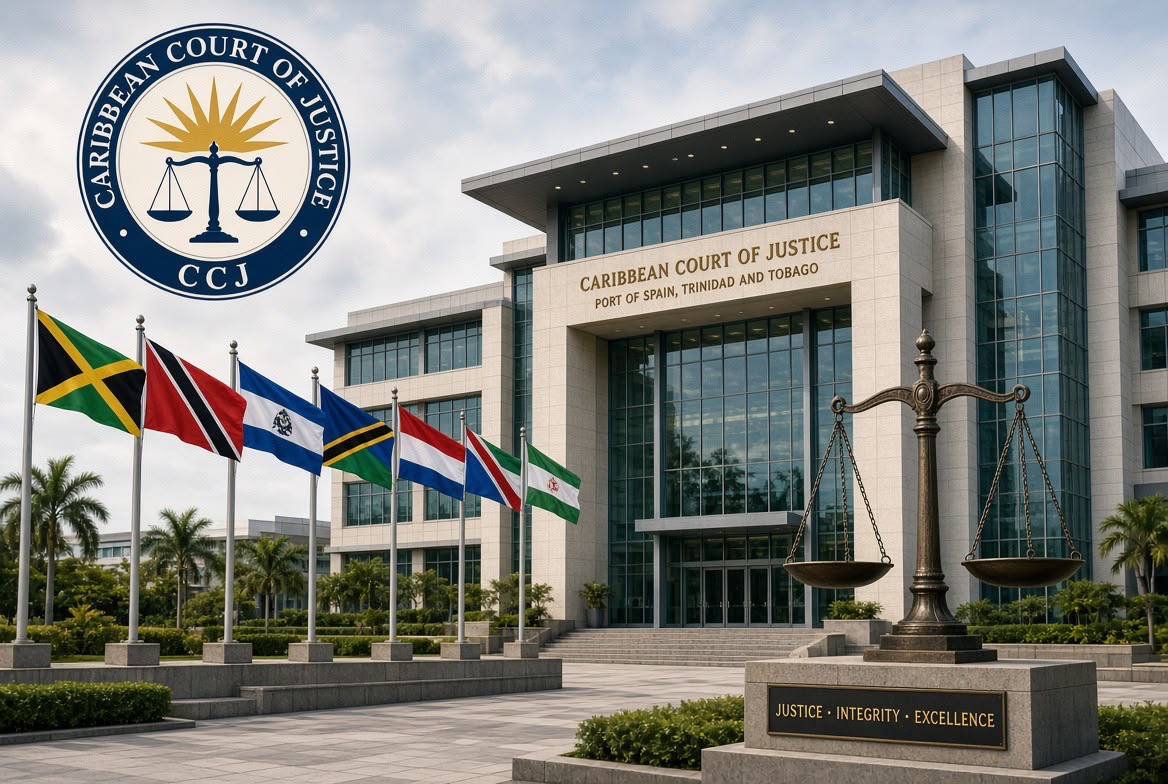
The President of the Caribbean Court of Justice (CCJ), the Honourable Mr Justice Winston Anderson, has issued a forceful defence of the Court’s integrity following recent reports concerning its internal affairs.
In a nine-page statement released on Friday, Anderson said the reports had caused “concern, anxiety and profound sadness” within the Court and across the Caribbean. He stressed that the CCJ represents decades of Caribbean effort to establish and sustain a regional final court and said that legacy “deserves our protection.” (Caribbean Court of Justice)
Anderson’s strongest criticism was directed at the unauthorised disclosure and publication of confidential Court correspondence and internal deliberations. He described the disclosures as “wholly unacceptable”, arguing that they undermine judicial collegiality, public confidence and the integrity of judicial deliberations. (Caribbean Court of Justice)
Addressing concerns about consultation, Anderson said that since assuming the presidency he has regularly sought the views of judges, management and staff. He pointed to regular judicial meetings and the establishment of an Executive Strategic Planning and Advisory Committee to advise him on major institutional matters.
A significant portion of the statement dealt with judicial attire. Anderson explained that the CCJ retained the Caribbean tradition of judicial robes, while bench jackets became accepted for interlocutory and chamber matters.
He acknowledged removing a fellow judge from an interlocutory panel in D’Almada v Trinidad and Tobago after the judge continued to wear traditional national dress rather than the established judicial attire. Anderson said the decision was based solely on the issue of dress and had nothing to do with the judge’s opinions or participation in judicial deliberations. The judge, he said, was subsequently included on the panel for the substantive hearing. (Caribbean Court of Justice)
Anderson said a proposed Judicial Dress Code was subsequently prepared and referred for consultation. He also proposed broader regional consultation on whether national dress should be permitted on the CCJ Bench.
The President categorically rejected allegations of “panel fixing”—the suggestion that panels were constituted or changed to influence the outcome of cases. He said the composition of panels has traditionally been an administrative responsibility of the President and insisted that the D’Almada panel change was motivated solely by the attire issue.
He announced that, going forward, every CCJ judge will sit on every panel unless the judge opts out for a legitimate reason.
Anderson also rejected allegations that he attempted to influence judicial decisions. Regarding Mohamed v Minister of Home Affairs, he said disagreements over aspects of legal reasoning during judicial deliberations were normal in a collegiate appellate court. He emphasised that all seven judges were unanimous on the disposition of the appeal and maintained that judicial independence remains inviolable. (Caribbean Court of Justice)
On Guyana, Anderson defended his discussions with the country’s President and Leader of the Opposition concerning the prolonged absence of substantive appointments to the offices of Chancellor and Chief Justice. He said the appointments had remained unresolved for more than two decades and that his intervention was motivated solely by concerns about constitutional judicial independence.
However, Anderson acknowledged that he might have been better served by limiting his intervention to public commentary, as his predecessors had done.
Despite the controversy, he highlighted the Court’s continued work in both its Appellate and Original Jurisdictions, including its role in regional integration under the Revised Treaty of Chaguaramas.
He concluded by pledging that the CCJ would continue to administer justice with “independence, fairness and integrity” and serve the people of the Caribbean.
Source: CCJ Media Release No. 31:2026 — Statement by the President of the CCJ, 14 August 2026