






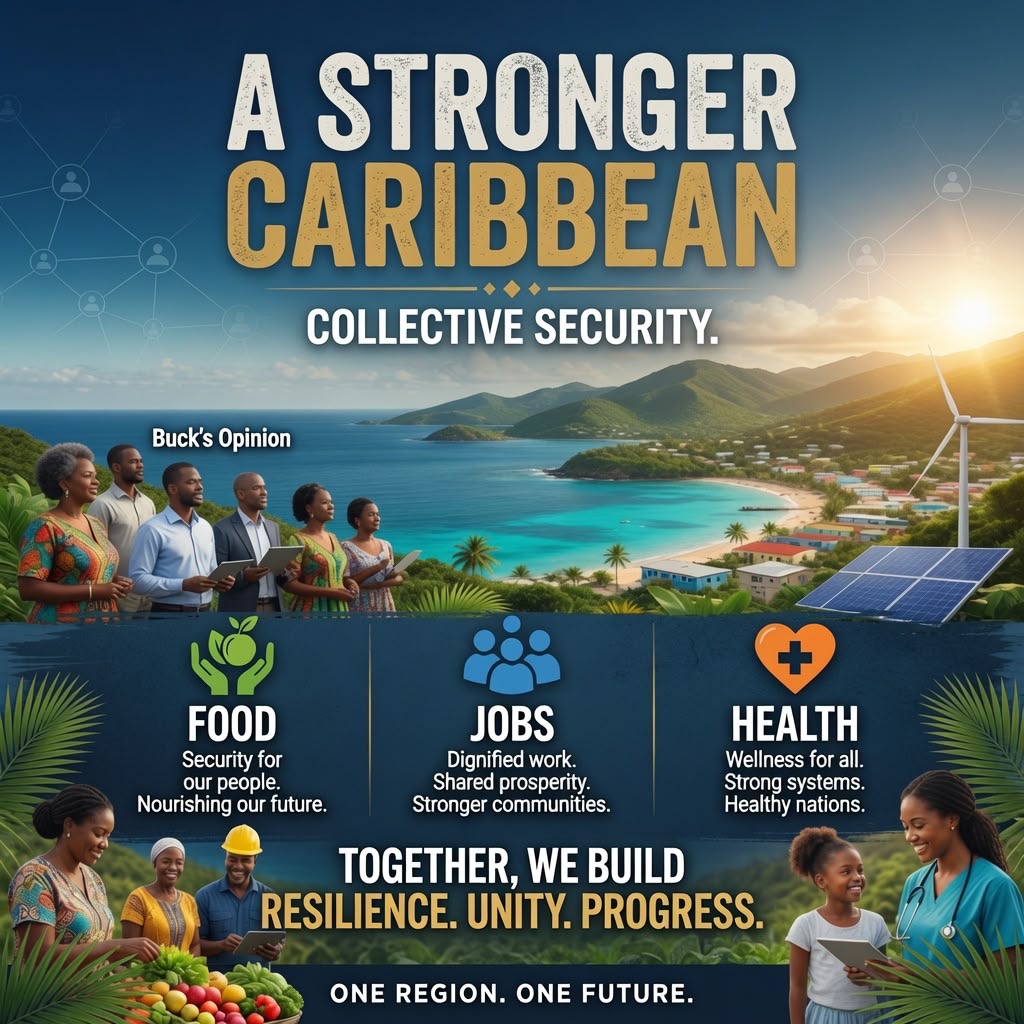
As geopolitical tensions deepen and nationalist politics gain traction in many parts of the world, the Caribbean faces a strategic question that extends beyond trade or diplomacy: can small island and coastal states safeguard their sovereignty by acting alone, or does their future depend on a stronger, more cohesive Caribbean Community?
Around the world, democratic institutions are under pressure. International organisations, including groups that monitor political rights and democracy, have documented democratic backsliding in a number of countries over the past decade. These trends have been accompanied in some places by increasingly centralised executive power, restrictions on civil liberties, anti-immigrant rhetoric, and a preference for unilateral rather than multilateral action. While political systems differ widely, these developments underscore a broader shift towards more assertive and less cooperative forms of governance.
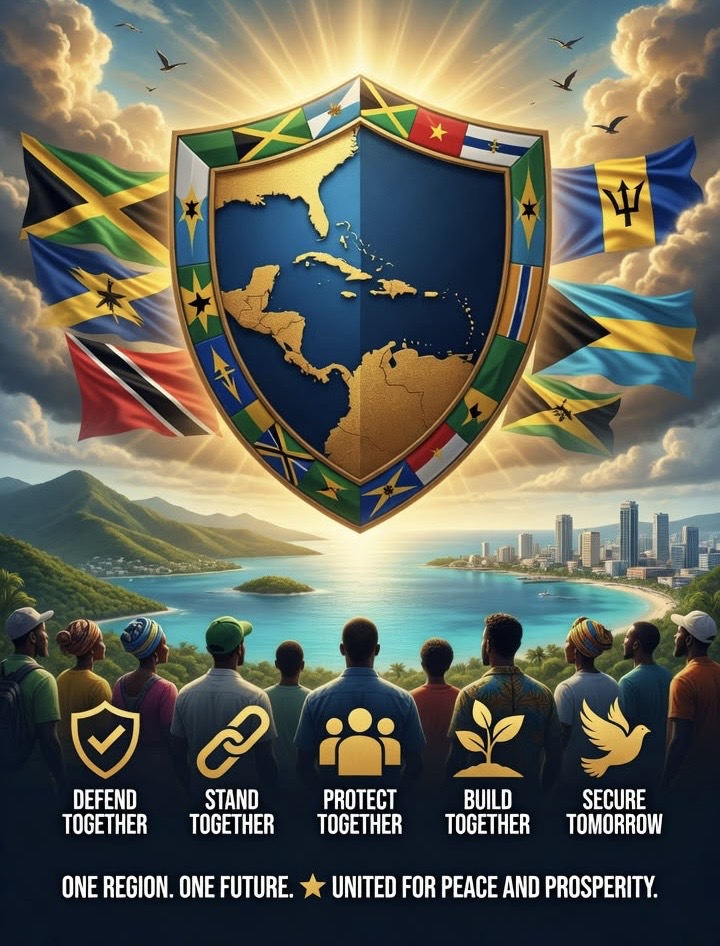
For the Caribbean, history offers an important lesson. Individually, CARICOM’s member states are relatively small in population, economic output, and military capability. Collectively, however, the Community represents nearly 20 million people, a strategic maritime region linking North and South America, and a unified diplomatic voice that has often carried influence disproportionate to its size.
That collective strength has proven valuable before.
CARICOM has played a central role in advocating for climate justice, debt relief, reparations for slavery and native genocide, food security, public health cooperation during the COVID-19 pandemic, and coordinated responses to regional security threats. More recently, leaders have strengthened collaboration on combating transnational organised crime through intelligence sharing, biometric systems, and joint border security initiatives.
The recent discussions between several CARICOM governments and the United States over third-country national migration illustrate why regional consultation matters.
Although each government retains sovereign authority over its immigration policy, Caribbean leaders have increasingly emphasised exchanging information, coordinating negotiating positions where appropriate, and ensuring that any agreements protect national interests rather than simply responding to external pressure. Antigua and Barbuda’s decision to publicly debate a negotiating framework in Parliament, alongside Jamaica’s assurances regarding its own arrangements, demonstrates different national approaches within a shared regional concern: preserving sovereignty while maintaining constructive international partnerships.
This reflects one of CARICOM’s greatest strengths. It is not a supranational government but a forum through which sovereign states can coordinate responses without surrendering their independence.
A stronger regional bloc also provides protection in economic negotiations. Whether discussing international taxation, development financing, correspondent banking, trade access, or climate adaptation funding, a united Caribbean voice carries greater weight than individual states negotiating separately with larger powers.
Security presents another compelling argument for deeper integration. Transnational criminal networks exploit porous maritime borders that no single Caribbean nation can effectively police alone. Intelligence sharing, interoperable law enforcement systems, and coordinated maritime surveillance improve regional resilience while respecting national sovereignty.
The same principle applies to disaster resilience. Hurricanes, earthquakes, and rising sea levels do not recognise political boundaries. Regional institutions have repeatedly demonstrated that coordinated disaster response can save lives and accelerate recovery.
A stronger Caribbean bloc does not require uniformity of opinion. Member states will continue to have different political priorities, economic relationships, and foreign policy interests. Healthy disagreement is consistent with democratic governance. The challenge is ensuring that these differences do not prevent cooperation where common interests clearly exist.
History also reminds the region that fragmentation has often benefited external powers more than Caribbean societies themselves. Colonial administrations frequently governed territories separately, limiting opportunities for unified political and economic development. CARICOM was founded in part to overcome that legacy by creating mechanisms for collective action among independent states.
Today’s global environment makes that mission no less relevant. Whether confronting climate change, organised crime, migration, economic uncertainty, or shifting geopolitical competition, Caribbean nations face challenges that increasingly transcend national borders.
The question is therefore not whether individual governments should retain sovereignty—they unquestionably should. Rather, it is whether that sovereignty is best protected through isolation or through coordinated regional action.
The evidence suggests that for small states navigating an increasingly uncertain international order, unity remains one of the Caribbean’s most valuable strategic assets.
A stronger CARICOM cannot eliminate external pressures. But by speaking with greater coherence, coordinating where interests align, and defending democratic institutions and the rule of law, the region can strengthen its ability to shape its own future rather than simply respond to decisions made elsewhere.