

By Jah B
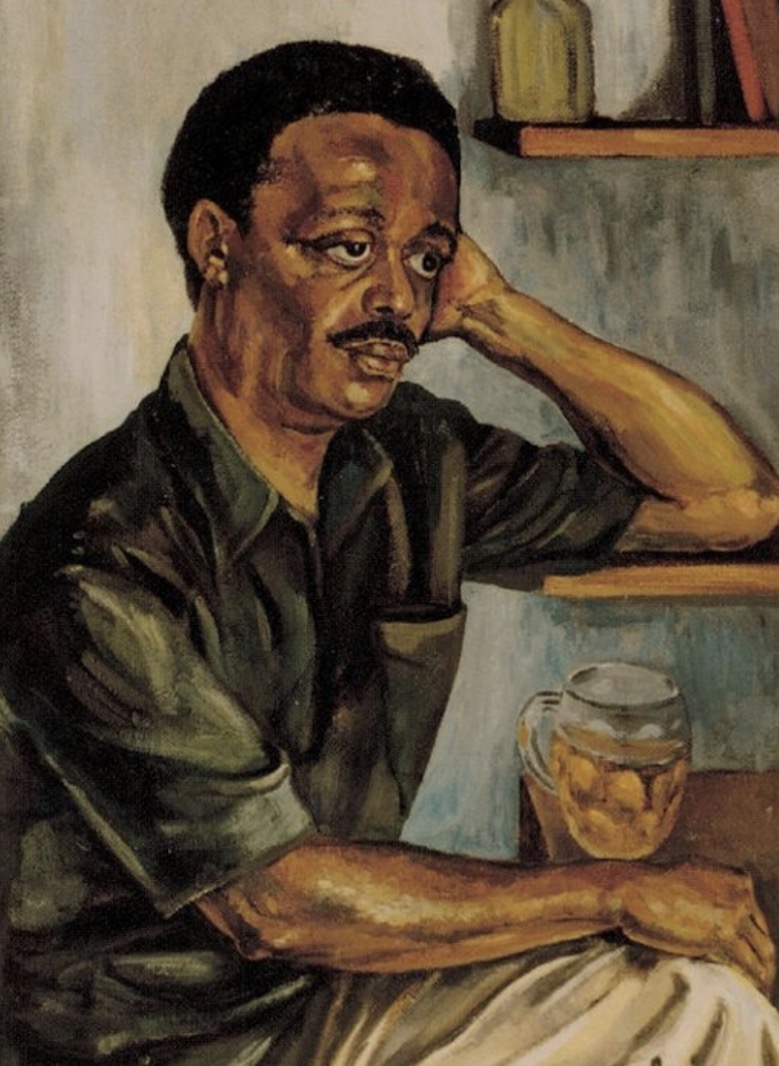
He was born in a Johannesburg slum, raised under the boot of apartheid, and forged in the fire of a world that told him his blackness was a burden. But Peter Henry Abrahams Deras — novelist, journalist, Pan-Africanist, and adopted son of Jamaica — turned all of that into literature that shook the world. Nine years after his passing, and against the backdrop of a Jamaica striving to leave its own shadows behind, it is only right that we pause to remember him.
A Life Lived in Full
Peter Abrahams was born on 3 March 1919 in Vrededorp, Transvaal — a mixed-race slum on the outskirts of Johannesburg. He taught himself to read at eleven, devoured the English classics against all odds, and by the time he was a teenager he was already writing poetry declaring, in his own defiant voice, the dignity of Black people. By 19, he had published A Black Man Speaks of Freedom and left South Africa for England, never to return as a resident.
In London, he became a journalist, a radical, and an organiser. He stood alongside Kwame Nkrumah, Jomo Kenyatta, W.E.B. Du Bois, and George Padmore to help plan the landmark Fifth Pan-African Congress in Manchester in 1945 — a meeting widely regarded as a turning point in the African independence movement. He married, wrote furiously, and produced work that cut through the comfortable silences of empire.
His novel Mine Boy (1946) became the first African novel written in English to attract serious international attention — a devastating portrait of a young man crushed by the racial machinery of South Africa’s gold mines. His memoir Tell Freedom: Memories of Africa (1954) remains one of the greatest autobiographies ever written from the African continent — a luminous, heartbreaking account of a childhood stolen by racism and redeemed by the written word.
Jamaica: The Land That Gave Him Peace
In 1956, Abrahams arrived in Jamaica on commission to write a history of the island. He never left.
“In the South Africa of my childhood and youth, I had to be against the system as an affirmation of my humanity,” he once wrote. “In Europe I had to be anti-colonialist, anti-imperialist. In the Jamaica of my adoption, I affirmed my humanity by becoming part of the process of the building of a nation.”
That was no small thing for a man who had spent his entire life fighting. Jamaica gave him the one thing apartheid and colonialism never could: the freedom to build, not just resist. He became a broadcaster on Radio Jamaica for four decades, speaking directly into the homes of ordinary Jamaicans. He edited the West Indian Economist. He wrote Jamaica: An Island Mosaic (1957), This Island Now (1966), and his masterpiece of the Caribbean canon, The View from Coyaba (1985) — a sweeping saga of four generations of a Jamaican family navigating race, resistance, and nationhood. His final memoir, The Coyaba Chronicles: Reflections on the Black Experience in the 20th Century (2000), was his last great gift — a meditation on everything he had witnessed and lived.
In 1994, the Institute of Jamaica awarded him the Musgrave Gold Medal for his contribution to writing and journalism. He was, by then, woven into the very fabric of this country.
How He Died — and Why It Still Matters
There is no honest remembrance of Peter Abrahams without acknowledging the tragedy and the bitter irony of how his life ended. On 18 January 2017, at the age of 97, he was found dead at his home in Saint Andrew Parish. His death was ruled a homicide. A neighbour was subsequently charged, pleaded guilty to manslaughter, and was sentenced to seven years in prison.
A man who had spent nearly a century writing against violence, dehumanisation, and the devaluation of Black life — was himself taken violently. The island he loved, the island that had given him peace, was also the island where he drew his last breath at the hands of another person. That contradiction deserves to be held, not explained away.
“This Is What He Wrote About” — Fred Gayle Speaks
It was a conversation that struck a chord. Fred Gayle — the kind of well-thinking Jamaican that Abrahams himself would have admired and recognised — was deep in discussion with Jah B when the name of Peter Abrahams came up, the way he lived and his contribution to Jamaica specifically.
Because the news coming out of Kingston — that National Security Minister Dr Horace Chang has projected Jamaica could end 2026 with fewer than 600 murders, building on the historic low of 674 in 2025 — is exactly the kind of news that men like Peter Abrahams would have been satisfied with knowing he chose Jamaica as his home. Fred Gayle and Jah B reminisced on the legendary journalist, Pan-Africanist and broadcaster.
As of 29 June 2026, murders are down a further 23% compared to the same period in 2025. If the trajectory holds, this year will mark a watershed moment in Jamaican history — one of the safest years in living memory.
What Abrahams Would Have Said
Peter Abrahams understood, perhaps better than most, that the violence of poverty and racism and state neglect were all connected. He saw it in the mines of Johannesburg. He saw it in the streets of colonial Britain. And he saw it in the Jamaica he loved — a Jamaica of extraordinary beauty and culture shadowed by the grief of too many funerals, too many mothers burying sons.
He would not have been naive about a government statistic. But he would have recognised — as Fred Gayle and Jah B did in that conversation — that every life not taken is a poem that gets to finish being written. Every community that grows quieter in the night is a community that can begin to imagine itself differently.
That is what Tell Freedom was always about. Not merely the freedom to leave a place that hates you — but the freedom to build somewhere that loves you back.
Jamaica loved Peter Abrahams. He said so himself. And the best way we can honour him is to become the Jamaica he believed we could be — one where no writer, no elder, no neighbour dies at the hands of violence in their own home. One where fewer than 600 murders is not a ceiling, but a beginning.
Rest in power, Peter Abrahams. Accompong News, Jah B and Fred Gayle remember.
Accompong News is published in the spirit of community, culture, and conscience.