





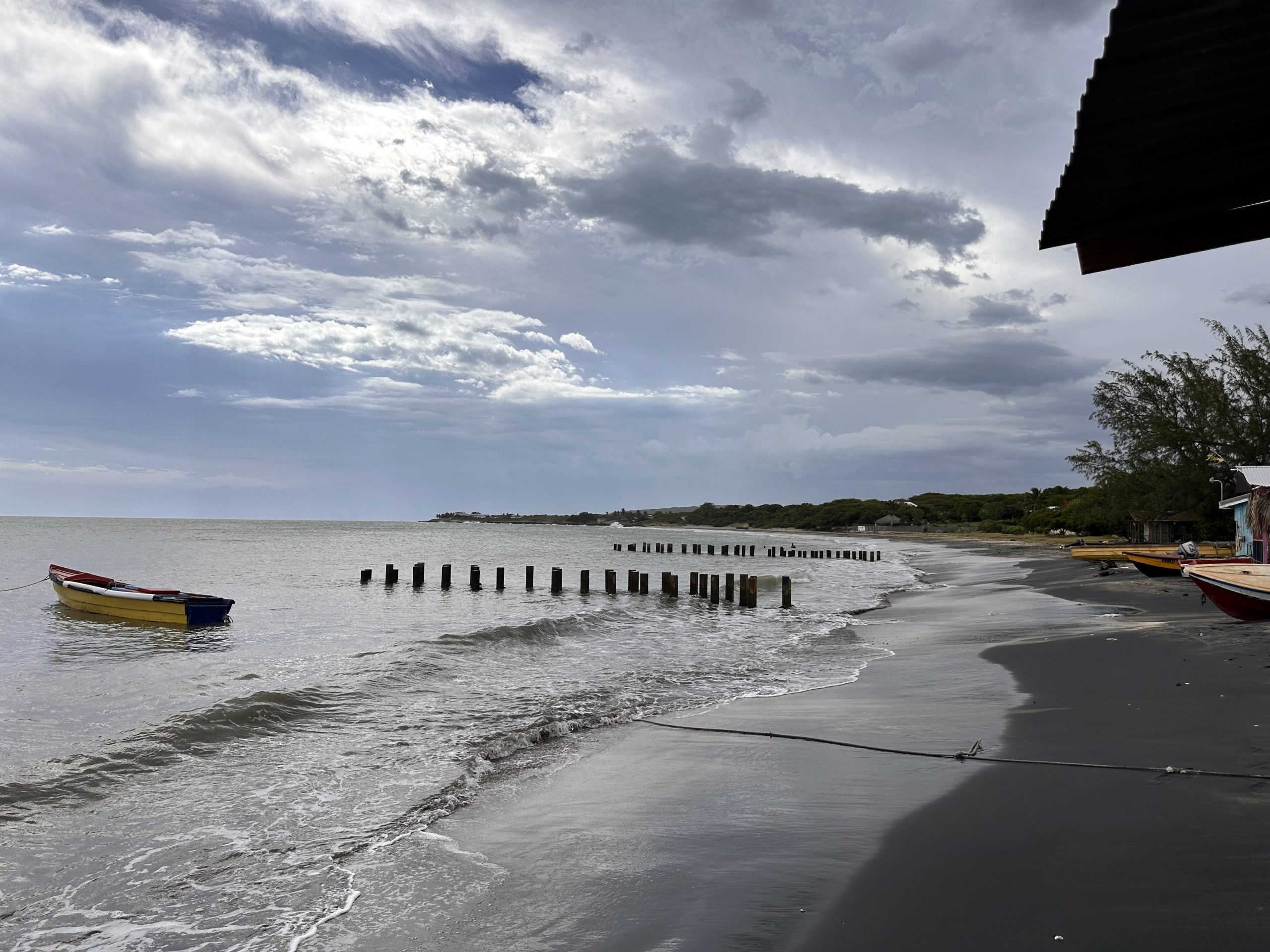
ST ELIZABETH, Jamaica — The striking dark, sometimes glistening sands of Great Bay and Alligator Pond Bay in Saint Elizabeth Jamaica have sparked curiosity and occasional speculation among residents and visitors, with some questioning whether the unusual coloration could be linked to oil deposits. Environmental observers and geologists, however, say the phenomenon is entirely natural.
Great Bay, located along Jamaica’s south coast, is known for its medium to dark brown sand—distinct from the powdery white beaches commonly associated with the island’s north coast tourism belt. According to coastal experts, the darker hue is the result of heavy mineral concentrations, including iron-rich particles and dense grains such as magnetite, which accumulate over time.
“These minerals are naturally present in the island’s geology,” one environmental source explained. “Wave action tends to sort and concentrate the heavier particles along the shoreline, especially after storms, which is why the sand can appear darker or even black and slightly reflective when wet.”
The south coast, including nearby communities like Treasure Beach and Alligator Pond, has long been known for its coarser darker sand. This is a telltale sign of a different geological history compared to the coral-based white sand beaches found elsewhere on the island compared to coral-based white sand beaches elsewhere on the island.
Environmental assessments have also identified Great Bay as part of an ancient coastal dune system, estimated to be thousands of years old. This makes the area not only geologically significant but also environmentally sensitive.
Despite occasional speculation, there is no evidence linking the sand’s coloration to petroleum or oil seepage. Experts note that oil contamination would typically produce a strong odour and a sticky, tar-like consistency—conditions not observed at Great Bay.
Instead, the dark sand is increasingly being viewed as a marker of the south coast’s relatively undisturbed natural state, shaped by centuries of wave action, sediment movement, and mineral deposition.
As interest in the area grows, environmental advocates are urging that any future development take into account the fragile nature of Great Bay’s ecosystem, emphasising that its unique sand is not just a visual curiosity, but a window into Jamaica’s geological past.