






ACCOMPONG, JAMAICA — May 25, 2026
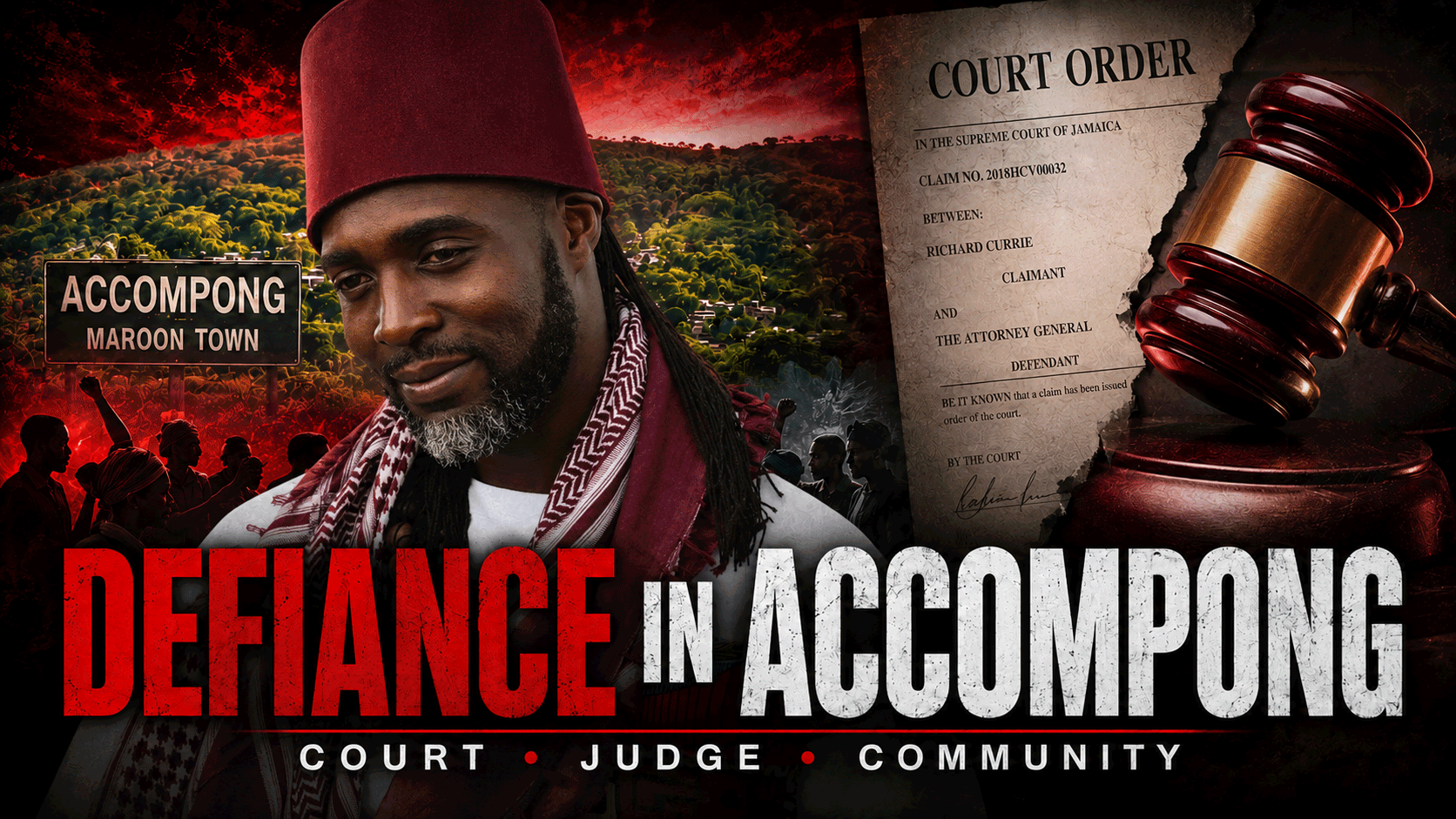
Richard Currie has sworn himself in as Chief of Accompong, escalating an already serious leadership crisis inside the Maroon community.
The ceremony took place despite unresolved objections from within Accompong, ongoing dispute over the election process, and the authority of the court and judge being openly challenged by his decision to proceed.
This was not a settled transition of leadership. It was a contested act carried out in the middle of a live dispute.
Currie’s decision to swear himself in is significant because it moves the matter beyond an ordinary election disagreement. By proceeding while the court process, judicial authority, and community objections remain unresolved, he has placed his personal claim to office above the institutions and people challenging that claim.
Community members have raised concern that people who do not live in Accompong were brought into the community to create the appearance of support. That has added to the seriousness of the situation, because Accompong leadership is supposed to be determined by the Maroon community itself, not by outside optics or a staged show of numbers.
The central issue is now clear: Richard Currie has defied the court, the judge, and the community members who object to the process. Instead of waiting for the dispute to be resolved, he proceeded as though the matter was already settled.
That decision has deepened the governance crisis in Accompong.
Accompong’s leadership carries constitutional, cultural, and treaty significance. The Chief is not simply a political figure. The office represents the authority of the Maroon people, their land, their traditions, and their internal order. For that reason, any disputed claim to the office must be handled with seriousness, transparency, and respect for proper process.
Today’s ceremony did not resolve those questions. It made them more urgent.
If a court process is active and a judge’s authority has been invoked, then moving forward in defiance of that process raises direct questions about lawful authority. If the community itself remains divided, then a public oath cannot be treated as full community consent. And if outsiders were brought in to strengthen the appearance of support, then the legitimacy of the ceremony becomes even more questionable.
The issue now is not only whether Currie claims to be Chief. The issue is whether his claim can stand when the process is still being challenged by the courts, the judge, and members of the Accompong community.
What happened today marks a serious turning point.
Richard Currie swore himself in.
He did so while the matter remained disputed.
He did so despite the court.
He did so despite the judge.
And he did so despite community objection.
That is the story.