




Richard Currie’s problem is no longer the election.
His problem is recognition.
And that problem was not created by the newspapers, the courts, the judge, the community, or his critics. It was created by Richard Currie himself.
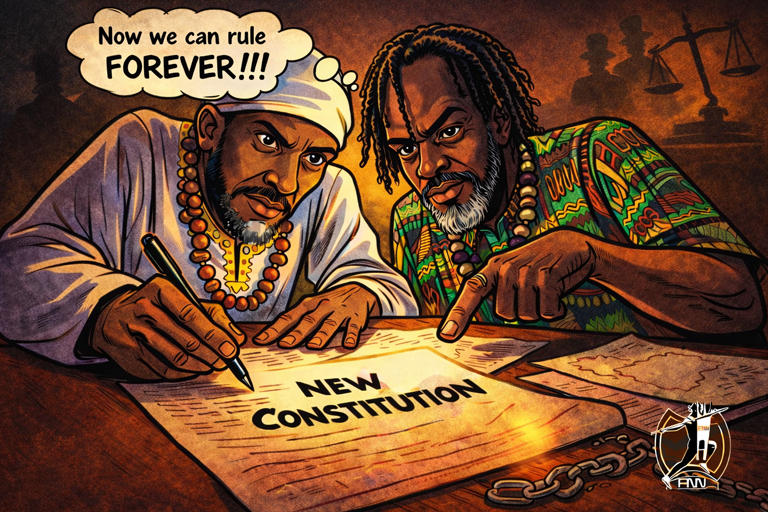
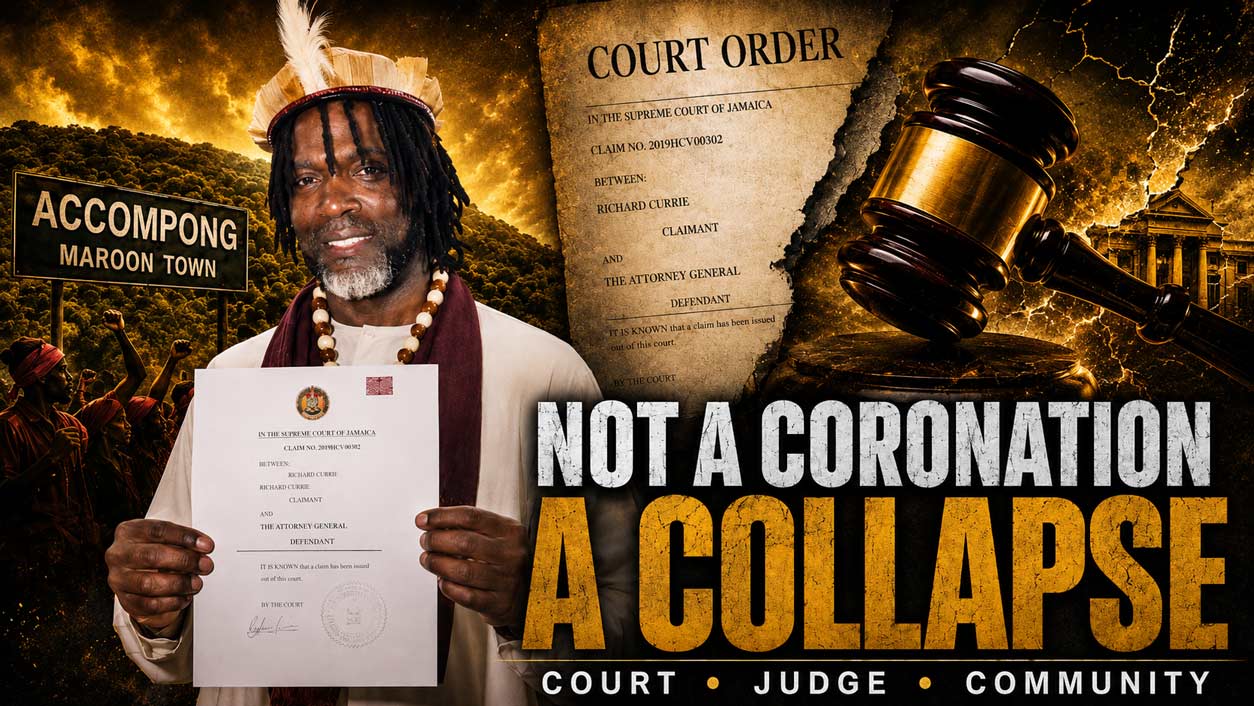
After a disputed election process, court involvement, judicial objection, and open concern from within Accompong, Currie made the worst possible move: he swore himself in.
That was not strength.
That was panic dressed up as authority.
A leader who is secure does not need to force the ending before the dispute is finished. A leader who is recognized does not need to manufacture legitimacy on camera. A leader who truly carries the people does not need to bring in bodies from outside the community to make the room look full.
Currie may have staged a ceremony, but he did not settle the matter.
He made it worse.
Because leadership in Accompong is not a costume. It is not a video clip. It is not a crowd shot. It is not a man standing before supporters and declaring the matter closed because he wants it closed.
The office of Chief must be recognized.
Recognized by the Maroon people.
Recognized through proper process.
Recognized by the community.
Recognized by institutions.
Recognized by those who must accept the authority of the office.
And that is where Currie has damaged himself.
By swearing himself in despite the court, despite the judge, and despite community objection, he has turned his own claim into a recognition crisis. Every serious institution now has reason to hesitate. Every observer has reason to question the process. Every critic has stronger ground than they had before the ceremony.
He may have wanted the image of victory.
What he created was evidence of defiance.
This is the part that cannot be fixed with optics. You cannot post your way into legitimacy. You cannot shout your way into lawful authority. You cannot bring outsiders into Accompong and call that community consent. You cannot step over a dispute and expect serious people to pretend the ground underneath you is solid.
Currie has single-handedly made his own re-election harder to recognize.
That is the consequence.
Not because people oppose him.
Not because the media is silent.
Not because the court is involved.
But because he chose to act as though none of it mattered.
He treated the court like an inconvenience.
He treated the judge like background noise.
He treated community objection like something to be overpowered.
He treated Accompong like a stage.
And now he wants recognition as Chief.
That is the contradiction.
Recognition does not come from forcing a ceremony. Recognition comes from confidence in the process. And Currie’s actions have weakened that confidence.
The newspapers may be quiet, but silence does not equal acceptance. The Jamaican state may not have rushed to speak, but hesitation is not recognition. A crowd may have gathered, but a crowd is not constitutional legitimacy.
This is where Currie miscalculated.
He thought the swearing-in would end the story.
It started the bigger one.
Now the question is not simply whether Currie claims to be Chief. The question is whether anyone serious will treat him as Chief after watching him push forward while the dispute was still alive.
Because from the outside, this does not look like settled leadership.
It looks like a man trying to outrun accountability.
It looks like a man trying to convert controversy into authority before anyone can stop him.
It looks like a man who knows recognition is slipping, so he tried to grab the image of power before the door closed.
But Accompong is bigger than Richard Currie.
The Maroon office is bigger than Richard Currie.
The authority of the community is bigger than Richard Currie.
And the treaty people of Accompong cannot be reduced to one man’s performance of power.
Currie may have sworn himself in.
But he may also have sworn away the very recognition he needed.
That is the consequence.
A ceremony can be staged in a day.
Recognition is harder.
And after what Currie has done, recognition may be the one thing he can no longer command.