




ACCOMPONG’S NEWS
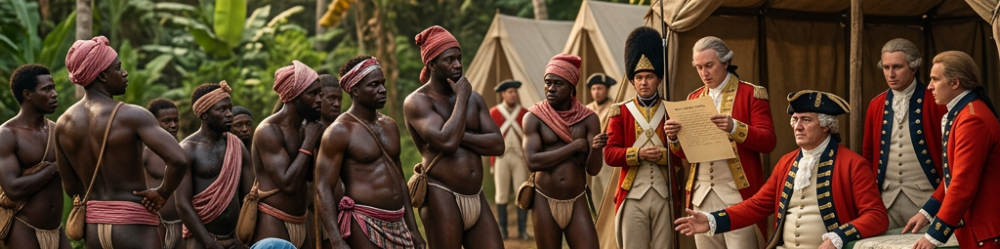
Accompong, Cockpit Country — More than a century ago, colonial Governor Vernor stood before a gathering of Maroons and made an offer that still resonates in discussions of land, autonomy, and treaty rights: thousands of additional acres, tax relief, and the formal creation of a communal reservation held in trust for the entire community.
The proposal came during an official visit to a Maroon settlement in the Cockpit Country. Vernor met privately with community leaders, then addressed residents after a luncheon in the combined church and schoolhouse.
“I want to safeguard the Maroons of the present. I want to safeguard the welfare of the Maroons of the future,” the governor told the crowd.
He first turned to long-standing claims rooted in the original Maroon treaties signed nearly 200 years earlier. Land that had recently been surveyed — measured at 1,250 acres, though once described as 1,000 — should be confirmed on the old treaty terms, he said: free of rent and free of land tax.
Vernor went further. He acknowledged that certain Crown lands already occupied by Maroons were, under colonial law, held by people technically regarded as trespassers. He proposed granting that land outright. In addition, he offered to reserve two to three thousand acres of Cockpit Country for the community’s benefit, subject only to a nominal rent. There would be no house tax, he promised, and no tax burden heavy enough to strain residents. Any future increase, he added, would belong to a distant time he did not expect to see.
The most far-reaching idea was the creation of a formal Maroon reservation. The land would belong to the community as a whole, not to any individual, and would be held in trust for present and future generations. Vernor argued that without sufficient land the community risked being “strangled.” He asked leaders to consider the proposal carefully and return with the people’s decision. The Maroons, he noted, had given little trouble and had largely been left to govern themselves. He saw no reason to change that approach.
On the question of licenses, Vernor took a firmer line. Full exemption from ordinary laws was not reasonable, he said. While earlier generations of Maroons had held special privileges that later faced restrictions, the people of his day enjoyed the same basic freedoms as other Jamaicans while still retaining unique rights. Demanding both the old privileges and major new expansions at once, he warned, would not be sustainable.
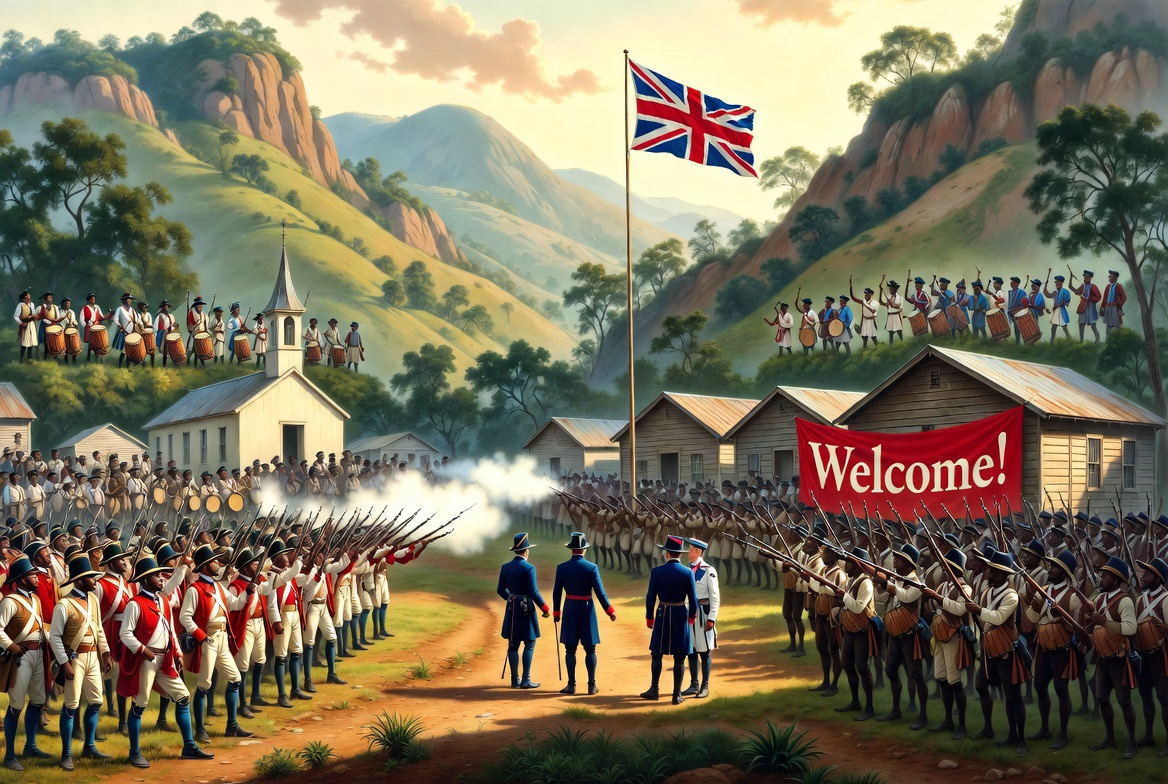
The visit itself followed traditional protocol. A guard of honour met the governor’s party near the house of the recently resigned Chief, Col. A. Rowe, where a large red “Welcome” banner flew. Maroons fired a ceremonial volley. Horns, drums, and children’s singing carried from the higher ground as the Union Jack flew over the decorated settlement. Officers including Col. Robertson escorted the visitors to a reception booth before the closed-door talks.
After the formal session, residents marched while singing an old Coromantee chant and fired muskets into the air. Drummers and dancers began performances on the parade ground, only for heavy rain to cut the entertainment short. The return journey over rain-slicked rocks proved more difficult than the morning trek, but the governor’s party reached their vehicles without incident.
The land offers and reservation proposal were left with Maroon leaders for community discussion. The episode captured a recurring tension in Jamaican history: the effort to expand and secure Maroon territory while negotiating the limits of special status within a colonial system. Those same questions of land, communal ownership, and treaty interpretation continue to shape conversations in Accompong and other Maroon towns today.