






Gros Islet, Saint Lucia
For much of its 53-year history, the Caribbean Community (CARICOM) has excelled at forging regional consensus. Its communiqués have consistently articulated bold visions for integration, economic cooperation, climate resilience, and collective diplomacy. Yet the Community has also faced a persistent criticism: translating consensus into implementation has often proved far more difficult than reaching agreement around the conference table.
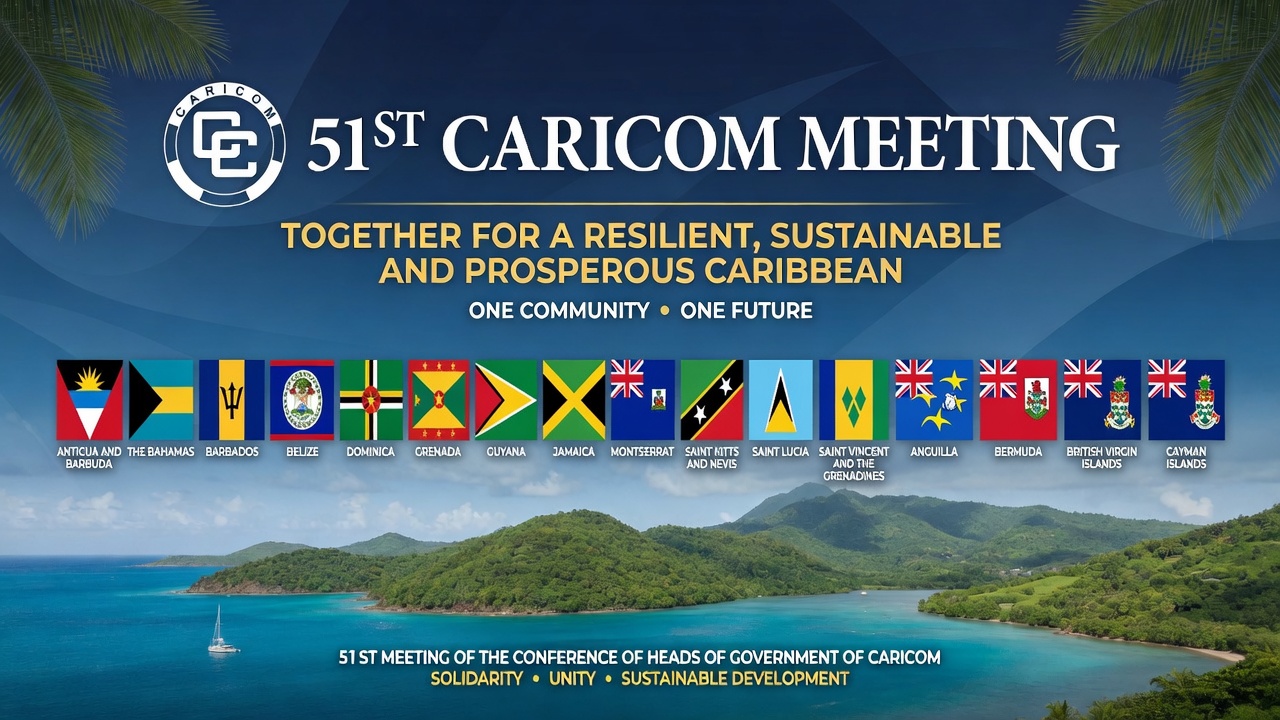
The communiqué issued after the Fifty-First Regular Meeting of the Conference of Heads of Government, held in Saint Lucia from 5–8 July under the chairmanship of Prime Minister Philip J. Pierre, suggests that regional leaders recognise this challenge. Rather than unveiling a dramatically new vision for Caribbean integration, the meeting focused on building the institutional architecture needed to implement priorities that have long appeared on the regional agenda.
The result is one of CARICOM’s most operationally focused communiqués in recent years. New task forces, expert commissions, implementation frameworks, and clearly assigned national responsibilities featured prominently alongside commitments on security, climate resilience, food security, digital transformation, and economic integration.
Whether these decisions ultimately reshape the Caribbean will depend less on what was agreed in Saint Lucia than on what governments do once they return home. Yet the summit may represent an important evolution in how CARICOM approaches regional governance—placing greater emphasis on delivery, accountability, and measurable outcomes.
A More Dangerous World Demands Collective Security
Global instability formed the backdrop to many of the summit’s discussions. Wars in Europe and the Middle East continue to disrupt international trade and energy markets. Climate-related disasters are increasing in frequency and intensity. Technological change is transforming economies at unprecedented speed, while transnational organised crime has become more sophisticated and deeply interconnected.

Against that backdrop, Caribbean leaders increasingly framed security not simply as a law enforcement issue but as a prerequisite for sustainable economic development.
Tourism remains the region’s largest foreign exchange earner, but persistent gang violence, illegal firearms trafficking, cybercrime, and organised criminal networks threaten investor confidence, public finances, and social stability. These are no longer challenges that individual states—many with populations smaller than a medium-sized city elsewhere in the world—can effectively confront alone.
Accordingly, Heads of Government reaffirmed support for the work of the CARICOM Implementation Agency for Crime and Security (IMPACS) and the Regional Security System (RSS), emphasising stronger intelligence sharing, operational coordination, and protection of regional security infrastructure.
No issue illustrated the interconnected nature of Caribbean security more clearly than Haiti.
The Conference reaffirmed support for Haiti’s Transitional Government under Prime Minister Didier Fils-Aimé, welcomed ongoing efforts to restore public order and prepare for elections, supported renewal of the Gang Suppression Force mandate, endorsed The Bahamas’ proposal to host a permanent CARICOM office in Port-au-Prince, and acknowledged Guyana’s humanitarian assistance through significant food donations.
Importantly, the discussions reflected an evolution in regional thinking. Haiti was not treated solely as a humanitarian concern but as a strategic regional issue. Continued instability risks fuelling migration pressures, expanding criminal networks, and undermining wider Caribbean security and economic confidence.
For CARICOM, supporting Haiti increasingly represents both solidarity and self-interest.
Food Security Becomes Economic Security
The COVID-19 pandemic, followed by successive global supply chain disruptions, fundamentally changed how Caribbean governments view food.
For decades, the region’s heavy dependence on imported food was recognised as an economic vulnerability. More recently, geopolitical shocks, shipping disruptions, and inflation have demonstrated that food imports also constitute a strategic security risk.
The Saint Lucia communiqué therefore treated food production as far more than an agricultural issue.
Leaders reviewed progress under the Special Ministerial Taskforce on Food Production and Food Security and reaffirmed the Vision 25 by 2025+5 initiative, which seeks to reduce the Community’s food import bill by expanding regional agricultural production, improving logistics, and increasing intra-CARICOM trade.
Equally significant was the emphasis placed on eliminating practical barriers that continue to fragment regional markets. Farmers across the Caribbean frequently encounter cumbersome customs procedures, inconsistent sanitary standards, and transportation bottlenecks that make it easier—and sometimes cheaper—to import food from outside the region than to trade with neighbouring islands.
Addressing those structural inefficiencies may ultimately prove as important as increasing agricultural production itself.
For Jamaica, the decisions carry particular strategic importance. Hosting the Twentieth Caribbean Week of Agriculture in September 2026 positions the island to showcase advances in climate-smart agriculture, agri-processing, and food innovation while strengthening commercial relationships throughout the Community.
If regional transport links improve and non-tariff barriers continue to fall, Jamaican producers could gain expanded access to markets across the Eastern Caribbean while reducing dependence on extra-regional suppliers.
Financing Resilience Before Disaster Strikes
Climate change remains the defining long-term challenge confronting small island developing states. The Caribbean contributes only a tiny fraction of global greenhouse gas emissions yet experiences some of the world’s highest levels of climate vulnerability.
Historically, regional responses have concentrated on disaster recovery—mobilising financial assistance after hurricanes, floods, and other climate-related events.
The Saint Lucia summit reflected a growing determination to change that model.
Among the most significant decisions was the agreement to establish a CARICOM Reinsurance Task Force alongside the development of a Regional Insurance and Reinsurance Strategy designed to address chronic under-insurance across both public infrastructure and private investment.
For many Caribbean governments, rising insurance premiums have become almost as significant a threat as the storms themselves. Some critical infrastructure is either inadequately insured or prohibitively expensive to protect, while tourism developments and small businesses increasingly face similar pressures.
Regional risk-sharing mechanisms could help spread exposure across member states, improve access to insurance markets, and reduce the fiscal burden governments face following disasters.
The Conference also endorsed the Vulnerability to Viability Compact with the Climate Vulnerable Forum, reaffirmed support for limiting global warming to 1.5°C ahead of COP31, approved the CARICOM Climate Diplomacy and COP35 Framework (2026–2030), and backed Guyana’s bid to host COP35 in 2030.
Collectively, these decisions illustrate a shift from reactive disaster response towards proactive climate risk management—a transition that many Caribbean policymakers have advocated for years.
Building a Caribbean Digital Future
Perhaps the clearest indication that CARICOM is looking beyond its traditional policy agenda came in discussions surrounding artificial intelligence and digital transformation.
Recognising that technological disruption will increasingly shape education, employment, financial services, and public administration, Heads of Government agreed to establish a Blue-Ribbon Commission to develop regional approaches to AI governance, ethics, regulation, and workforce development.
The decision acknowledges an important reality. Small states acting independently often struggle to shape international technology standards. Acting collectively gives CARICOM a stronger voice while helping avoid fragmented national regulatory systems that could discourage investment and complicate digital trade.
The Conference also adopted regional guidelines governing children’s access to social media while continuing work on cybersecurity and digital government integration.
Although these initiatives remain at an early stage, they demonstrate that CARICOM increasingly views digital transformation not simply as a technology issue but as a competitiveness agenda.
Integration Through Practical Connectivity
Regional integration has long been constrained by one stubborn obstacle: moving people and goods around the Caribbean remains unnecessarily expensive and inefficient.
The Conference therefore devoted renewed attention to transportation, welcoming progress toward establishing an intraregional ferry service that could significantly improve commercial connectivity.
While often overshadowed by larger policy announcements, improvements in regional transport could produce some of the most immediate economic benefits. Lower shipping costs would support agricultural exports, reduce import prices, strengthen tourism, and make labour mobility more practical.
Leaders also welcomed continued implementation of free movement provisions by Grenada and Saint Lucia, noted Montserrat’s preparations to accede to the Revised Treaty of Chaguaramas, and discussed integrated capital markets, cross-border payments, and coordinated responses to rising living costs.
These may appear technical reforms, but together they address the practical barriers that continue to limit the full potential of the CARICOM Single Market and Economy.
Navigating an Increasingly Complex World
The summit also highlighted CARICOM’s evolving diplomatic strategy.
Rather than aligning exclusively with any major geopolitical bloc, the Community continues pursuing diversified partnerships across Africa, Europe, Asia, Latin America, and the Middle East.
French Guiana was welcomed as the Community’s eighth Associate Member, while progress continued on applications from Bermuda and the Turks and Caicos Islands.
Leaders also issued statements on Gaza and the West Bank, expressed concern regarding developments in Lebanon, and reaffirmed support for Cuba, reflecting CARICOM’s longstanding commitment to international law, humanitarian principles, and multilateral diplomacy.
Reparatory justice likewise remained central to the regional agenda. By reaffirming the CARICOM Ten Point Plan for Reparatory Justice and supporting Jamaica’s planned petition to King Charles III, Heads of Government signalled that reparations continue to form part of the Community’s broader strategy for addressing the enduring economic consequences of slavery and colonialism.
What the Summit Means for Jamaica
For Jamaica, the Saint Lucia meeting presents opportunities to assume greater regional leadership while requiring stronger domestic implementation.
Hosting Caribbean Week of Agriculture could strengthen Jamaica’s position as a regional hub for agricultural innovation and food processing. Expanded security cooperation complements national efforts to combat organised crime and illegal firearms trafficking. New climate finance mechanisms may improve resilience planning for infrastructure and tourism, while common digital standards could benefit Jamaica’s growing technology, financial services, and business process outsourcing sectors.
At the same time, deeper regional integration will require sustained investment in transportation infrastructure, customs modernisation, digital public services, and implementation of CSME commitments.
Success will ultimately depend as much on national execution as on regional agreement.
The Challenge Beyond Saint Lucia
The Saint Lucia communiqué does not solve CARICOM’s longstanding implementation deficit. Many initiatives remain at the planning stage, and the Community continues to operate within the fiscal and administrative constraints facing its member states.
Nevertheless, the conference suggests a subtle but potentially significant evolution in regional governance. Rather than relying primarily on declarations of intent, leaders increasingly sought to establish institutions, assign responsibilities, and create mechanisms through which progress can be monitored.
As CARICOM Secretary-General Dr. Carla Barnett observed, moving “from resilience to renewal” requires the Caribbean to shape its own future through collective action.
The true test of the Saint Lucia summit will therefore not be measured by the breadth of its communiqué but by whether citizens experience tangible improvements in security, food affordability, climate resilience, transportation, digital opportunity, and economic growth over the coming years.
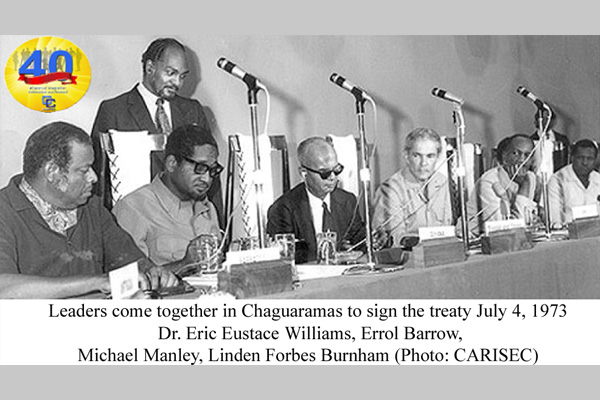
If governments sustain the political commitment demonstrated in Saint Lucia, the Fifty-First Conference of Heads of Government may come to be seen not as the meeting that promised the most, but as the one that began changing how CARICOM delivers on its promises.